


Rack and Pinion Actuator Advantages Over Standard Pneumatic Actuators
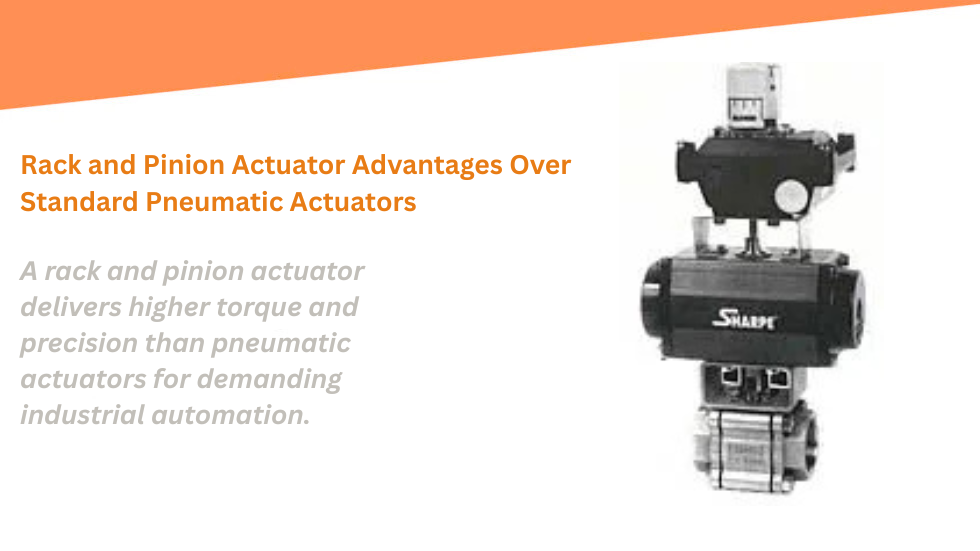
In modern automation, motion control systems must deliver accuracy, reliability, and long-term durability. While the traditional pneumatic actuator remains a staple for simple linear or rotary tasks, many industrial applications now demand higher torque, tighter tolerances, and more predictable performance. This is where the rack and pinion actuator stands out. By converting linear piston movement into controlled rotary motion through a gear-driven mechanism, it offers capabilities that standard pneumatic designs often cannot match.
Higher Torque and More Stable Rotary Output
A rack and pinion actuator generates rotary motion through a meshing gear system, allowing it to deliver strong, consistent torque throughout its full rotation. This mechanical advantage is especially valuable in applications where valves, dampers, or heavy-duty mechanisms must overcome friction, pressure, or irregular loads. Unlike a basic pneumatic actuator, which can lose force due to air compressibility or pressure fluctuations, the gear-driven design maintains stable performance even under demanding conditions.
Better Accuracy
Precision is one of the defining strengths of a rack and pinion actuator. Because its motion is guided by rigid mechanical components rather than compressed air alone, it offers more predictable positioning and minimal backlash. This makes it work well for automated valve control, robotics, packaging equipment, and other systems where consistent angular alignment is needed. A standard pneumatic actuator can be fast and economical, but it often lacks the fine control needed for high-precision tasks.
Harsh & Industrial Environment Durability
 Industrial facilities place heavy demands on motion control equipment. Rack and pinion actuators are built with robust internal gearing, corrosion-resistant housings, and reinforced bearings that withstand vibration, shock, and continuous cycling. Their mechanical stability allows them to perform reliably in environments where temperature swings, contaminants, or high-cycle operation would quickly wear down a typical pneumatic actuator. This durability translates into fewer failures, less downtime, and lower long-term operating costs.
Rack and Pinion Actuator Flexibility for Motion Requirements
While a pneumatic actuator generally provides straightforward linear or limited rotary movement, a rack and pinion actuator supports a wider range of rotation angles and bidirectional control. Engineers can specify 90°, 120°, 180°, or custom rotation ranges depending on the application. This flexibility allows designers to simplify mechanisms, reduce part counts, and achieve more efficient system layouts without relying on external linkages or additional components.
Automation and Control Compatibility
 Modern automation systems require actuators that integrate seamlessly with sensors, positioners, and digital control platforms. Rack and pinion actuators pair well with advanced feedback devices and modulating controls, enabling precise motion adjustments and real-time monitoring. While pneumatic actuators can be automated as well, they often lack the mechanical stability needed for fine modulation or high-resolution positioning. For facilities moving toward smarter, more connected operations, the rack and pinion design offers a clear advantage.
When to Choose a Rack and Pinion Actuator
A rack and pinion actuator is the stronger choice when an application requires:
- High torque output with consistent rotary motion
- Precise, repeatable positioning
- Long term durability under heavy cycling
- Compatibility with advanced automation and feedback systems
Standard pneumatic actuators remain useful for simple, low-precision tasks, but when performance matters, the rack and pinion design delivers a clear edge.
Find Your Rack and Pinion Actuator
Both actuator types have their place, but the rack and pinion actuator excels when torque, precision, and long-term reliability play a large role. It outperforms the standard pneumatic actuator in demanding environments, high-cycle applications, and systems requiring accurate rotary motion. For OEMs and engineers designing next-generation equipment, it provides a powerful combination of mechanical strength and automation ready performance.
Ready to improve your motion control system? Get expert guidance on selecting the right actuator for your application and ensure your equipment performs at its highest potential. Contact SEMCOR today to find yours!
Rotary Vane Actuator Sealing Technology and Leakage Prevention
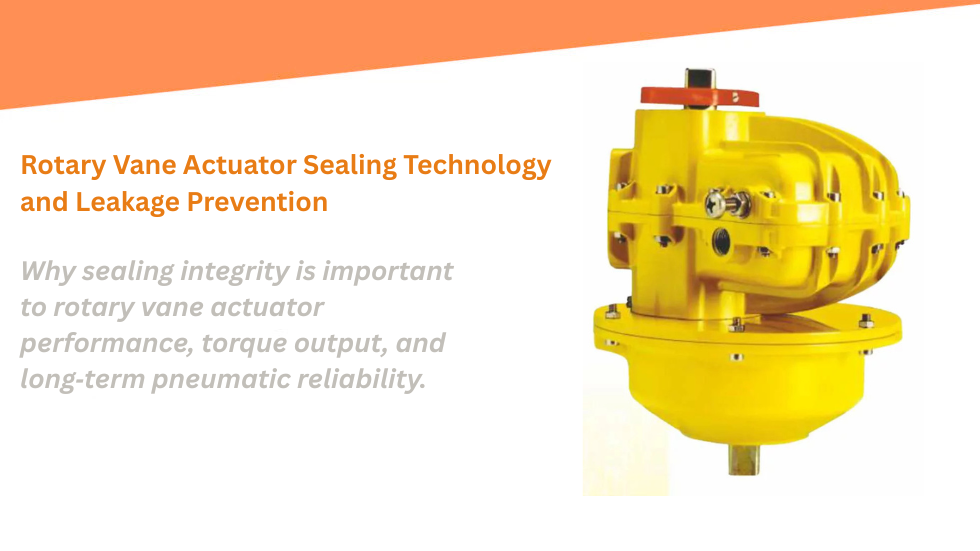
A rotary vane actuator can be used in automation, material handling, packaging, and industrial motion systems because it delivers smooth, controlled rotary motion in a compact footprint. As a subset of pneumatic actuators, they convert compressed air into precise rotational force using a sealed internal chamber and a rotating vane. But the performance of any rotary vane actuator ultimately depends on one identifying factor: the integrity of its sealing system.
A well designed seal prevents internal air leakage, maintains torque output, and ensures long term reliability. A poorly performing seal, on the other hand, leads to torque loss, erratic motion, increased air consumption, and premature actuator failure. An understanding of sealing technology is needed for engineers specifying or maintaining rotary vane actuators.
How Sealing Works Inside a Rotary Vane Actuator
Inside a rotary vane actuator, a central rotor with one or more vanes divides the internal housing into separate pressure chambers. When compressed air enters one chamber, it forces the vane to rotate, producing torque. The vane edges and housing walls must be tightly sealed to prevent air from bypassing the pressure zones.
Modern rotary vane actuators rely on:
- Elastomeric seals (NBR, Viton, EPDM)
- PTFE or filled PTFE seals for low friction
- Precision machined sealing surfaces
- Lubricated or self lubricating materials
These seals maintain the pressure differential that makes rotary motion possible. Without them, the actuator behaves more like a leaky air motor than a precision motion device.
Common Causes of Leakage in a Rotary Vane Actuator
Leakage is the most common performance issue in pneumatic rotary vane actuators. It typically results from:
- Seal wear or abrasion due to high cycle counts
- Dry air supply that removes lubrication from seals
- Contaminants (dust, oil, moisture) damaging sealing surfaces
- Improper air filtration leading to particulate scoring
- Thermal cycling causing seal shrinkage or hardening
- Incorrect installation or misalignment of the actuator
Even small leaks can reduce torque output significantly, especially in low pressure systems.
Sealing Technologies Used in a Modern Rotary Vane Actuator
Today’s rotary vane actuators use advanced sealing technologies to improve efficiency and extend service life:
1. PTFE Lip Seals
- Low friction
- Excellent wear resistance
- Perfect for high cycle pneumatic applications
2. Elastomeric O Ring Seals
- Common in general purpose actuators
- Good for moderate pressures and temperatures
3. U Cup Seals
- Provide strong sealing under pressure
- Self energizing design improves performance as pressure increases
4. Composite Seals
- Combine elastomers with PTFE or nylon
- Used in high precision or high torque rotary vane actuators
5. Molded Vane Seals
- Integrated into the vane itself
- Reduce assembly complexity and improve reliability
Rotary Vane Actuator Leakage Prevention Strategies
Preventing leakage is far easier than repairing it. Engineers can extend actuator life by following these best practices:
Use Proper Air Filtration
Compressed air should be clean, dry, and filtered to 5 microns or better. Contaminants are the #1 cause of seal wear.
Maintain Correct Lubrication
Some rotary vane actuators are designed for lubricated air, while others are lube free. Using the wrong air supply can degrade seals.
Avoid Over Pressurization
Exceeding rated pressure can deform seals and damage the housing.
Monitor Cycle Rates
High speed cycling increases frictional heat and accelerates seal wear.
Inspect Seals During Maintenance
Look for:
- Hardening
- Cracking
- Flattening
- Surface scoring
Replacing seals early prevents torque loss and air waste.
Rotary Vane Actuator vs. Other Pneumatic Actuators
While rotary vane actuators are a type of pneumatic actuator, they differ from rack and pinion or scotch yoke designs in several ways:
Advantages
- Smooth, continuous rotation
- Compact, low profile design
- Fewer moving parts
- Excellent repeatability
- Minimal backlash
Limitations
- Lower maximum torque compared to rack and pinion
- Seal wear is a primary maintenance concern
- Not as effective for dirty or unfiltered air systems
For applications requiring precise, repeatable rotation, such as indexing, clamping, or valve actuation, rotary vane actuators remain one of the most efficient pneumatic solutions available.
Applications That Benefit Most from High Quality Sealing
Rotary vane actuators with advanced sealing systems excel in:
- Packaging machinery
- Material handling systems
- Automated assembly lines
- Valve actuation
- Robotics end effectors
- Conveyor diverters
- Pharmaceutical and food grade automation
In these environments, even minor leakage can disrupt timing, reduce torque, or cause inconsistent motion, making sealing performance mission critical.
Is a Rotary Vane Actuator Right for You?
Rotary vane actuators remain one of the most reliable and efficient forms of pneumatic actuation, but only when their sealing systems are properly engineered and maintained. By understanding sealing technologies, recognizing early signs of leakage, and following best practices for air quality and maintenance, engineers can dramatically extend actuator life and ensure consistent, high precision performance.
If you’re evaluating rotary vane actuators for a new system or troubleshooting performance issues in an existing pneumatic setup, now is the perfect time to upgrade your approach to sealing reliability. Our engineering team can help you identify the right actuator design, sealing technology, and maintenance strategy to maximize torque output and eliminate leakage concerns. Contact us today to discuss your application and get expert guidance tailored to your exact operating conditions.
Advantages of Using a Pneumatic Actuator in High Speed Equipment
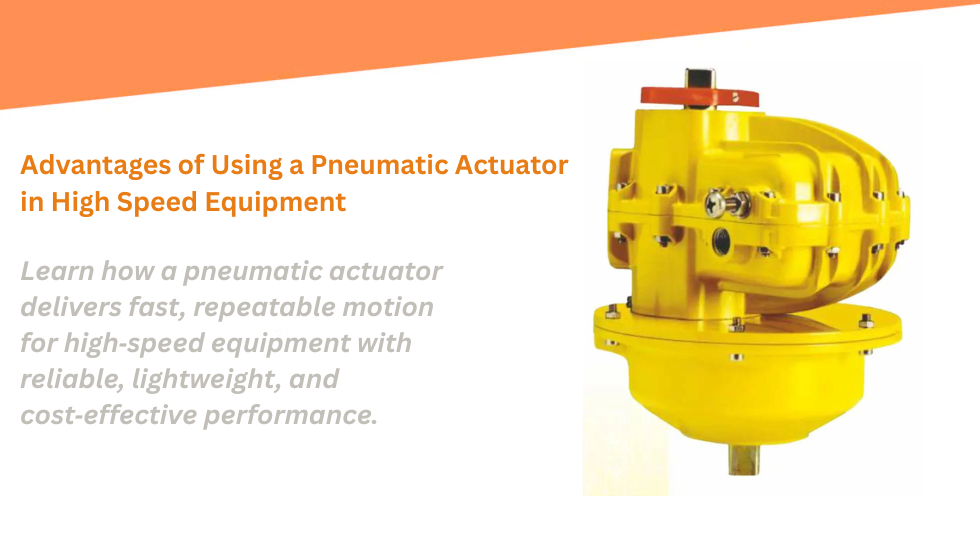
High speed equipment demands motion systems that respond quickly, operate reliably, and maintain consistent performance under repetitive cycling. Pneumatic actuators have become a preferred choice in these environments because they deliver rapid movement, simple integration, and dependable operation without the complexity of hydraulic or fully electric systems. A pneumatic actuator combines speed, force, and durability to make them well suited for automated machinery, packaging lines, robotics, and material handling systems.
Fast, Repeatable Motion for High Cycle Applications
Pneumatic actuators excel in applications where rapid extension and retraction are required. Compressed air can be delivered and exhausted quickly, allowing the actuator to cycle at high speeds with minimal delay. This makes pneumatic systems ideal for equipment that performs thousands of cycles per shift, such as pick and place units, stamping systems, and automated sorting equipment.
Because the motion is driven by air pressure rather than mechanical gearing, pneumatic actuators maintain consistent speed even under varying loads. This stability supports predictable timing and smooth synchronization with other machine components.
Lightweight Components That Reduce System Load
 A pneumatic actuator is inherently lighter than many hydraulic or electromechanical alternatives. This lower mass reduces inertia, allowing the actuator to accelerate and decelerate quickly without placing excess strain on the machine frame or support structure.
In high speed equipment, lighter components translate to:
- Faster response times
- Reduced wear on mounting hardware
- Lower energy consumption
- Improved overall machine efficiency
This is especially valuable in applications where actuators must move with the tooling or end of arm equipment.
Simple Pneumatic Actuator Design for Reliable Operation
One of the biggest advantages of pneumatic actuators is their mechanical simplicity. With fewer moving parts and no complex electronics, they are less prone to failure and easier to maintain. This reliability is needed in high speed environments where downtime can quickly become costly.
Key benefits include:
- Minimal lubrication requirements
- Straightforward troubleshooting
- Long service life with proper air quality
- Easy replacement or rebuild when needed
Their simplicity also makes pneumatic actuators a strong fit for facilities that prioritize uptime and predictable maintenance schedules.
Cost Effective Performance at Scale
Pneumatic systems offer a favorable cost profile for high speed equipment. Compressed air is already available in most industrial facilities, and pneumatic actuators themselves are economical to purchase, install, and maintain.
Cost advantages include:
- Lower initial investment compared to electric or hydraulic systems
- Reduced maintenance labor
- Inexpensive replacement components
- Long term durability in repetitive motion environments
For equipment manufacturers and end users, this combination of performance and affordability makes pneumatic actuators a practical choice for large scale automation.
Flexible Pneumatic Actuator Control for High Speed Motion
Modern pneumatic actuators can be paired with advanced valves, sensors, and flow controls to achieve precise motion profiles. While they are not designed for micron level positioning, they offer excellent control for high speed tasks that require:
- Rapid actuation
- Consistent stroke length
- Adjustable speed
- Smooth transitions between cycles
This flexibility allows engineers to fine tune performance without redesigning the entire motion system.
Well Suited for Harsh or Demanding Environments
High speed equipment often operates in environments with dust, vibration, temperature changes, or washdown requirements. Pneumatic actuators handle these conditions well because they are not dependent on sensitive electronics or hydraulic fluids.
They perform reliably in:
- Food and beverage processing
- Packaging and bottling lines
- Automotive assembly
- Material handling
- General industrial automation
Their durability makes them a strong choice for equipment that must run continuously in challenging conditions.
Incorporating a Pneumatic Actuator in Your High-Speed Equipment
Pneumatic actuators offer a compelling combination of speed, reliability, simplicity, and cost effectiveness for high speed equipment. Their ability to deliver rapid, repeatable motion with minimal maintenance makes them a trusted solution across a wide range of industrial applications. For manufacturers seeking dependable performance without the complexity of hydraulic or fully electric systems, pneumatic actuators remain a proven and practical choice.
If you’re evaluating motion solutions for high speed equipment, our team can help you determine whether a pneumatic actuator is the right fit for your application. Connect with SEMCOR to review performance requirements, compare actuator options, or request a quote for your next project. We’ll work with you to identify a reliable, cost effective solution that supports your production goals.
Electric vs Pneumatic Valve Actuators Explained
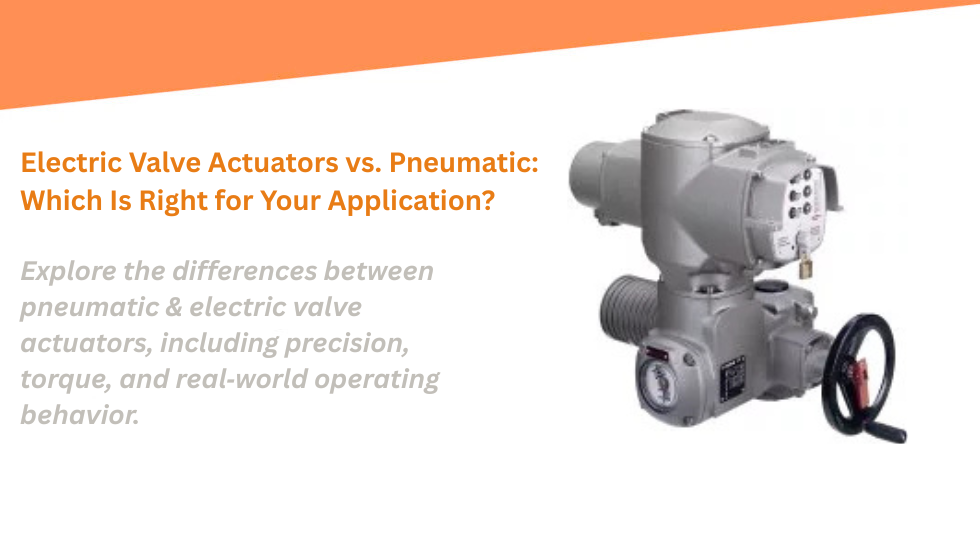
Choosing the right valve actuator is a foundational decision in any automated flow control system. Electric valve actuators and pneumatic actuators are both proven technologies, each with strengths that make them well suited for specific operating environments. The challenge isn’t deciding which one is “better,” but determining which one aligns with the performance, infrastructure, and lifecycle requirements of your application.
This article breaks down how each actuator type behaves in real world conditions so you can make a confident, application driven choice.
How Electric Valve Actuators Perform
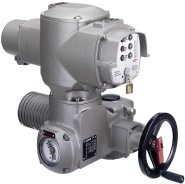
Electric valve actuators convert electrical energy into rotary or linear motion using a motor and gear train. Their biggest advantage is precision. Because they rely on controlled electrical signals, they excel in applications where fine positioning, repeatability, and smooth modulation are important.
Electric actuators integrate easily with digital control systems, offering built in feedback, diagnostics, and compatibility with PLC, SCADA, and IIoT platforms. They also operate quietly and require no compressed air infrastructure, making them ideal for facilities where electrical power is readily available and noise must be minimized.
However, electric actuators typically operate at slower speeds than pneumatic systems, and their electronics may require additional protection in harsh or hazardous environments.
How Pneumatic Valve Actuators Perform
 Pneumatic actuators use compressed air to generate motion, delivering fast response times and high torque output. Their mechanical simplicity makes them extremely durable in environments with vibration, temperature swings, or washdown requirements.
Because they can cycle quickly and deliver significant force, pneumatic actuators are often chosen for emergency shutoff, high throughput processes, or large valves with high breakaway torque. They are also well suited for facilities that already maintain a clean, reliable compressed air system.
While pneumatic actuators can modulate effectively, achieving fine control typically requires a high quality positioner. Air consumption and air quality can also influence long term operating costs.
Key Differences in Real World Use
When comparing electric and pneumatic actuators, the most meaningful distinctions show up in how they behave under specific operating conditions.
Speed Requirements: Pneumatic actuators respond quickly, making them ideal for rapid open/close cycles. Electric actuators move more deliberately, which is advantageous for smooth modulation.
Environmental Conditions: Pneumatics tolerate harsh environments with fewer protective measures. Electric actuators perform best in clean, controlled settings unless equipped with specialized enclosures.
Control Strategy: Electric actuators offer advanced digital control out of the box. Pneumatics can achieve similar performance with the right accessories but require additional components.
Infrastructure Availability: If a facility lacks compressed air, electric actuation is often the more practical choice. If air is already available, pneumatic systems integrate easily.
Torque and Valve Size: Large valves or sticky media often favor pneumatic actuation due to the high force output. Electric actuators handle moderate torque requirements with excellent precision.
Choosing the Right Actuator for Your Application
 The best actuator is the one that aligns with your operational priorities. Consider the following when evaluating your options:
- How fast does the valve need to move?
- If your process requires rapid open/close cycles, such as emergency shutdown, high‑throughput batching, or fast‑acting control, pneumatic actuators typically deliver the speed needed. For slower, smoother, or more controlled movement, electric actuators provide consistent, deliberate positioning.
- Is precise modulation or simple open/close control required?
- For fine throttling, proportional control, or applications where small adjustments matter, electric actuators offer excellent resolution. If the valve only needs to open or close, or if modulation tolerances are wide, pneumatic actuation is often sufficient.
- What utilities are available at the installation site?
- If your facility already maintains a clean, reliable compressed air system, pneumatic actuators integrate easily. If compressed air is unavailable or costly to install, electric actuators are typically the more practical choice.
- How harsh is the operating environment?
- Pneumatic actuators tolerate vibration, moisture, temperature swings, and washdown conditions with minimal protection. Electric actuators perform best in controlled environments unless equipped with specialized enclosures or ratings.
- What torque is required to operate the valve reliably?
- Large valves, sticky media, or high breakaway torque often favor pneumatic actuators due to their strong force output. Electric actuators handle moderate torque requirements well, especially when precision is the priority.
- How important are diagnostics, feedback, and remote monitoring?
- Electric actuators offer built in electronics for position feedback, alarms, and integration with PLC/SCADA systems. Pneumatic actuators can achieve similar functionality with positioners and accessories, but require additional components.
- What is the expected lifecycle cost, not just the upfront cost?
- Electric actuators may have a higher initial price but lower ongoing energy consumption. Pneumatic actuators often cost less upfront but rely on compressed air, which can increase long term operating costs depending on system efficiency.
Both electric and pneumatic actuators can deliver excellent performance when matched correctly to the application. The key is understanding the operational context and selecting the technology that supports long term reliability and efficiency.
Electric Valve Actuator or Pneumatic Actuator?
Electric valve actuators and pneumatic actuators each bring distinct advantages to automated flow control systems. Electric actuators shine in precision, digital integration, and environments where clean, quiet operation is essential. Pneumatic actuators excel in speed, torque, and ruggedness, especially in facilities already equipped with compressed air.
If you’re evaluating actuator options for a new installation or upgrading existing equipment, contact our team to help you compare configurations, performance characteristics, and lifecycle considerations to ensure you select the right solution for your application.
What Engineers Need to Know About Actuator Valve Response Time
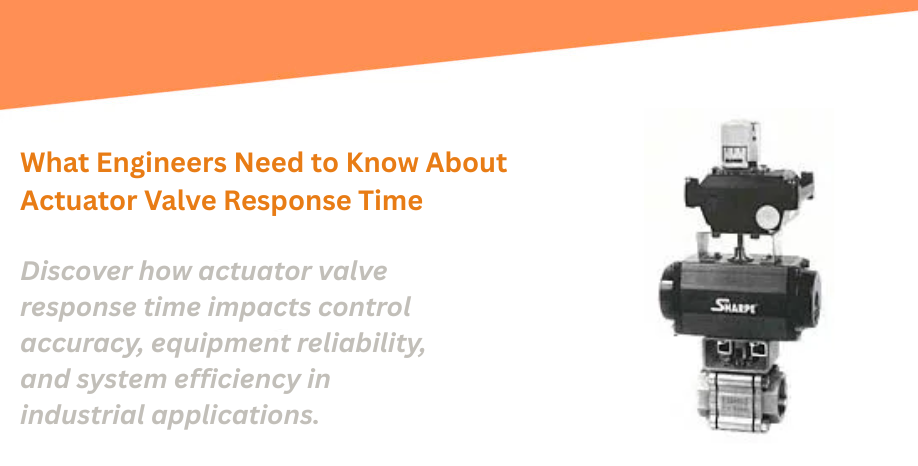
Actuator valve response time plays a defining role in how fluid handling and process control systems behave under real operating conditions. Whether the application involves steam distribution, chemical batching, compressed air, or high purity water, the speed at which a valve moves from one position to another directly affects stability, accuracy, and overall system efficiency. For engineers responsible for specifying, tuning, or maintaining automated valves, understanding the factors that influence response time is essential for achieving predictable performance.
Why Response Time Matters in Modern Process Control
Response time determines how quickly a valve can react to a command signal, whether that signal comes from a PLC, DCS, or local controller. In fast acting systems such as high cycle packaging lines, burner management systems, or pressure control loops, even small delays can introduce oscillation, overshoot, or inconsistent flow. Slow response can also reduce throughput, increase energy consumption, and cause premature wear on pumps, compressors, and downstream equipment. In applications involving safety interlocks or emergency shutdowns, response time becomes a core performance requirement rather than a convenience.
Key Factors That Influence Actuator Valve Response Time
Several mechanical, electrical, and pneumatic variables determine how quickly an actuator can reposition the valve element:
- Actuator Type — Pneumatic actuators typically offer faster stroke speeds than electric actuators, while hydraulic actuators excel in high force applications where rapid movement under load is required.
- Valve Size and Trim Design — Larger valves with heavier internal components require more force and time to reposition, especially in high pressure systems.
- Air Supply Quality (for Pneumatic Actuators) — Line pressure, regulator performance, tubing length, and flow restrictions all affect stroke speed.
- Control Signal and Positioner Dynamics — Smart positioners with optimized tuning can significantly reduce dead time and improve step response.
- Friction and Mechanical Resistance — Stem packing, bearing condition, and valve body geometry influence how easily the valve can move through its stroke.
- Load Conditions — Differential pressure across the valve can either assist or resist movement, altering response time under varying process conditions.
Knowing these variables helps engineers select actuators that match the dynamic requirements of their control loops.
How Response Time Affects Control Loop Performance
In closed loop control, the actuator valve is part of a larger system that includes sensors, controllers, and process dynamics. A slow or inconsistent response time can:
- Increase loop oscillation
- Reduce control accuracy
- Cause hunting or instability
- Delay setpoint achievement
- Increase wear on mechanical components
Fast, predictable response improves loop tuning, reduces variability, and supports tighter process control, especially in applications involving temperature regulation, pressure control, or flow modulation.
Measuring and Specifying Response Time
Engineers typically evaluate response time using metrics such as:
- Dead Time — The delay between command signal and initial movement
- Stroke Time — Time required to move from fully closed to fully open (or vice versa)
- Step Response — How quickly the valve reaches a new position after a step change
Manufacturers often publish nominal stroke times, but real world performance depends heavily on installation conditions. Field testing or commissioning phase verification is recommended for critical applications.
Improving Actuator Valve Response Time
 Several strategies can enhance response time without replacing the entire valve assembly:
- Upgrading to a high flow positioner or booster relay
- Increasing pneumatic supply pressure within allowable limits
- Reducing tubing length and eliminating flow restrictions
- Optimizing PID tuning parameters
- Using low friction packing or advanced stem coatings
- Selecting actuators with higher torque or thrust ratings
These adjustments help ensure that the valve responds consistently across its full operating range.
Final Considerations for Engineers
Actuator valve response is a system level performance characteristic influenced by mechanical design, control strategy, and process conditions. Engineers who understand these interactions can better match actuator technologies to application requirements, reduce variability, and improve overall system reliability.
Ready to improve system performance? Contact SEMCOR’s technical team for application specific actuator valve guidance and product recommendations.
Pneumatic Actuators: How They Work & Key Benefits
Pneumatic Actuators Explained
Updated On: 9/23/2026
Pneumatic actuators are essential to hundreds of different industries and have many uses. To understand how you can apply pneumatic cylinders, you should familiarize yourself with the fundamentals.
This guide will answer the questions: what is a pneumatic actuator, how does an actuator work, what are the different types available and what is the function of a pneumatic actuator?
Key Takeaways: Pneumatic Actuators: How They Work & Key Benefits
- Pneumatic actuators convert compressed air or gas into linear or rotary motion, making them widely used for valve automation, process control, machinery operation, and fluid handling systems.
- Single-acting and double-acting pneumatic cylinders serve different operating requirements. Single-acting cylinders use a spring return and lower air consumption, while double-acting cylinders provide greater force, faster operation, and continuous bidirectional motion.
- Pneumatic actuators are commonly selected for hazardous and demanding industrial environments because they operate without electricity at the point of actuation, making them well suited for applications where ignition risks must be minimized.
- When comparing pneumatic and electric actuators, factors such as force requirements, positioning accuracy, operating environment, and overall system costs should guide equipment selection. Pneumatic actuators are often preferred for high-force, repetitive-duty applications, while electric actuators provide greater positioning precision.
What Is a Pneumatic Actuation System?
Pneumatic actuators are highly reliable, efficient and safe sources of motion control that use pressurized air or gas to convert energy into rotary or linear motion. They’re especially appropriate for the repeated opening and closing of valves and other industrial applications where the use of electricity may cause a fire or ignition hazard. Actuators are commonly used to control the valves that direct the movement of fluids in the chemical and process industries.
Pneumatic actuators have several different names, including pneumatic cylinders, air cylinders and air actuators. Each of these terms is synonymous with the other, as they all identify the device as air pressure based. Another name for an air cylinder is pneumatic ram, in which the ram is referring to the linear piston.
How Does a Pneumatic Actuator Work?
Pneumatic actuators rely on some form of pressurized gas — most often compressed air — entering a chamber, where the gas builds up pressure. When it has built up enough pressure in contrast to the outside atmospheric pressure, it results in the controlled kinetic movement of a device such as a piston or gear. This resulting movement can be directed in either a straight line or circular motion.
Since the conversion of compressed gas into energy can be highly controlled and is reliable and repeatable, pneumatic actuators are one of the most popular mechanical devices used in a wide array of modern industries.
Types of Pneumatic Cylinders
There are two primary varieties of pneumatic linear actuators — single-acting and double-acting. They both work to push forward a piston, but the main differences are the return method and number of ports.
Single-acting cylinders have one port that allows air to flow into the cylinder. The pressure increases and pushes the piston forward or backward, depending on whether it is a push or pull type. A large spring returns the piston to its original position, preparing it for another burst of pressure. The spring is either positioned inside the cylinder or on the outside.
Double-acting cylinders operate without a spring and instead have two ports, one on either end of the piston. The first application of pressure pushes the piston forward, a step in the process that the two models share. Then, the second burst of pressure on the other side of the cylinder pushes the piston back into place. The device applies pressure back and forth to create a smooth linear motion.
Typically, double-action cylinders are better for industrial uses that require speed and strength, as they provide more force at a faster rate. They may also offer a longer lifespan before needing replacement. However, they are a more expensive option in comparison. Single action cylinders also have other advantages besides cost. They have a more straightforward design, are more compact and require half the amount of compressed air to function.
Pneumatic Actuator Applications
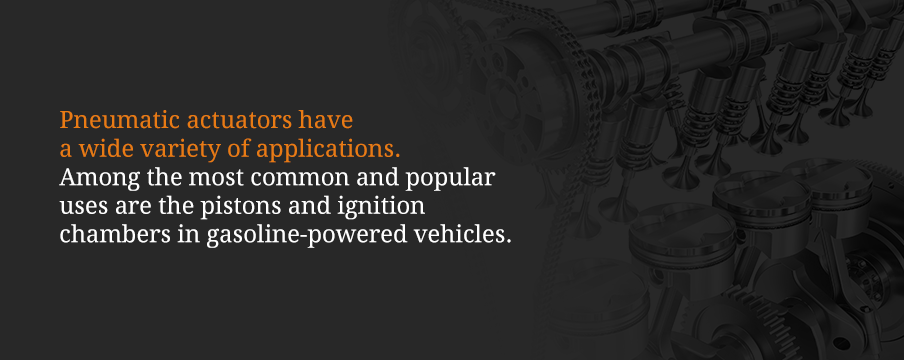
Pneumatic actuators have a wide variety of applications. Among the most common and popular uses are the pistons and ignition chambers in gasoline-powered vehicles. They use ignition of the air and gasoline to create the pressurized force that eventually moves the piston and converts energy into the car’s crankshaft. However, the majority of pneumatic actuators rely only on pressurized gas with no ignition to produce the desired mechanical force.
In addition to the conventional combustible automobile engine, pneumatic actuators are essential in air compressors, packaging and production machinery, mail tubes and transportation equipment like railway and aircraft applications. They’re crucial in many other industrial situations that call for switch, pump or sensor control as well.
Pneumatic vs. Electric Actuators
While pneumatic cylinders work by way of pressurized air, electric actuators use electricity to function. Electric actuators are made up of a screw, coupler and motor, such as a stepper or servo. The screw turns and moves a nut, which makes the connecting rod or carriage shift the load. While pneumatic and electric actuators have similar uses, they aren’t directly interchangeable in every industry.
These two types of actuators vary in several other ways:
- Cost: Overall, pneumatic actuators have lower initial costs than the electric variety, but each has their purposes, and either could end up saving money in operating costs. Pneumatic cylinders are the most cost-efficient when the compressor size matches the number of cylinders it’s powering. Electric actuators provide the highest level of efficiency in moderate scales, though they have low operating costs in general.
- Force: In pneumatic actuators, speed and thrust are positively linked, meaning as one increases, the other does as well. In electric actuators, thrust and speed do not have the same link, as one decreases as the other increases. You can engineer them to perform differently, but it requires higher expenses.
- Control: Where pneumatic cylinders are better for industries that need force, electric actuators provide more accurate control and positioning. The standard models of the electric variety can move with precision from hundredths to thousandths of an inch.
Advantages of Pneumatic Actuators
The benefits of pneumatic actuators stem from both their overall safety and reliability. First of all, since pneumatic actuators can convert energy into motion without ignition or electricity, they’re highly sought after in situations where sparking and combustion cannot be tolerated. In these settings, compressed air can be stored and used in an efficient and repeatable manner that poses no fire risk.
Second, since pneumatic actuators that don’t rely on combustion can be manufactured easily and are relatively simple devices, they are also extremely durable, have minimal maintenance needs and offer a long operational life when used correctly.
Trust SEMCOR Pneumatic Actuator Supply
As one of the most reliable distributors of pneumatic actuators, SEMCOR is ready to supply you with the equipment you need from leading manufacturers. In addition, thanks to our outstanding expertise and customer care, the technical support that comes with all our actuators is unbeatable. Contact us now for product descriptions, selection guidance and more.