


How Conveyor Belts Reduce Downtime in Production Lines
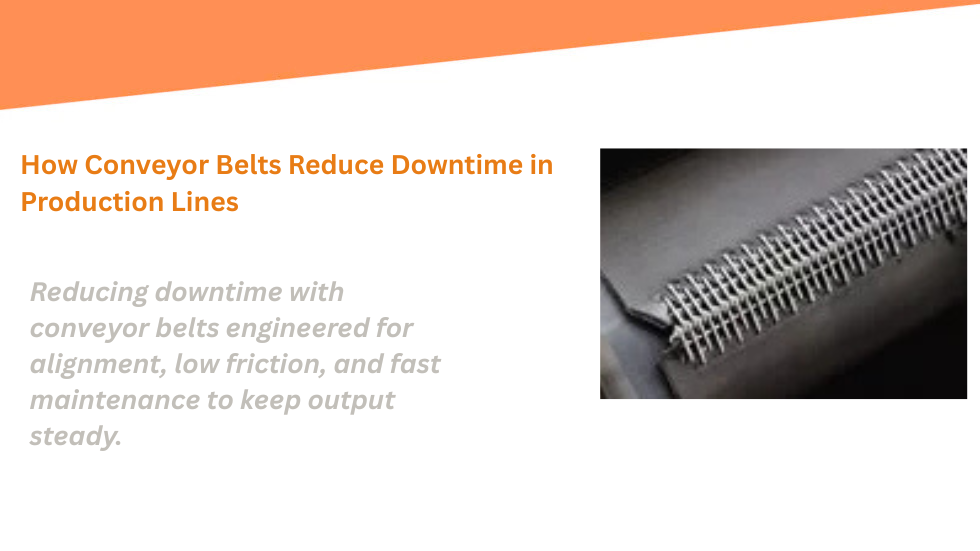
Conveyor belts play an important modern role in keeping production lines moving at a steady pace. When they operate smoothly, they help maintain throughput, reduce manual handling, and support predictable scheduling. When they fail, however, the entire line can come to a halt. That’s why many facilities view conveyor belts not just as equipment, but as a direct contributor to uptime and operational stability.
Modern conveyor systems are engineered to minimize stoppages by improving belt tracking, reducing friction, and supporting easier maintenance. Whether used in packaging, assembly, food processing, or bulk material handling, the right conveyor belt can significantly reduce unplanned downtime and help facilities maintain consistent output.
Improved Belt Tracking Prevents Line Interruptions
One of the most common causes of conveyor-related downtime is belt misalignment. When a belt drifts off-center, it can rub against the frame, spill product, or trigger emergency stops. Today’s conveyor belts are designed with tracking features that help maintain proper alignment even under variable loads.
These improvements include reinforced edges, low-stretch materials, and tracking guides that keep the belt centered. By reducing the need for constant adjustments, facilities experience fewer stoppages and less wear on both the belt and the conveyor structure.
Durable Materials Extend Conveyor Belts Service Life
 Conveyor belts are available in a wide range of materials, each chosen for its ability to withstand specific operating conditions. Heat, abrasion, oils, moisture, and sharp materials can all shorten belt life if the wrong material is used.
Selecting a belt that matches the application reduces premature wear and helps avoid unexpected failures. Longer belt life means fewer shutdowns for replacement, fewer maintenance hours, and more predictable production schedules.
Faster Maintenance Through Modular Designs
Many modern conveyor belts are built with modular sections that can be replaced quickly. Instead of removing an entire belt, technicians can swap out only the damaged portion. This approach reduces repair time and helps facilities return to full operation faster.
Modular designs also simplify cleaning and inspection, allowing maintenance teams to identify issues early and prevent small problems from turning into major disruptions.
Reduced Friction Lowers Energy Use and Heat Buildup
Lower friction in a conveyor system helps prevent unnecessary wear and reduces the strain placed on motors and bearings. Modern conveyor belts support this through several design improvements:
- Low-friction belt surfaces that glide smoothly over rollers and slider beds
- Optimized tensioning systems that prevent over-tightening and reduce drag
- Materials that resist heat buildup during continuous operation
- Improved pulley and roller designs that minimize resistance during movement
These features work together to reduce mechanical stress, extend component life, and support more consistent operation across the production line.
Better Integration with Automation Systems
As production lines become more automated, conveyor belts must work seamlessly with sensors, robotics, and control systems. Belts designed for automation support consistent speed, stable product positioning, and reliable indexing.
This stability reduces jams, misfeeds, and stoppages caused by inconsistent product flow. When conveyors integrate smoothly with automated equipment, the entire line benefits from fewer interruptions.
Learn How Conveyor Belts Can Help Your Production
A well chosen conveyor belt does more than move products from one station to the next. It supports steady production, reduces maintenance demands, and helps prevent the interruptions that slow down a facility. By selecting belts that match the application, resist wear, and integrate smoothly with automated equipment, operations can maintain a more predictable workflow and reduce the likelihood of unplanned stoppages.
If you are evaluating ways to improve uptime or considering upgrades to your current conveyor system, now is an excellent time to explore belt options that support smoother, more dependable performance. The right belt can help your production line run with fewer interruptions and more consistent output.
Contact us to learn more about conveyor belt solutions that help keep production moving.
Rack and Pinion Actuator Advantages Over Standard Pneumatic Actuators
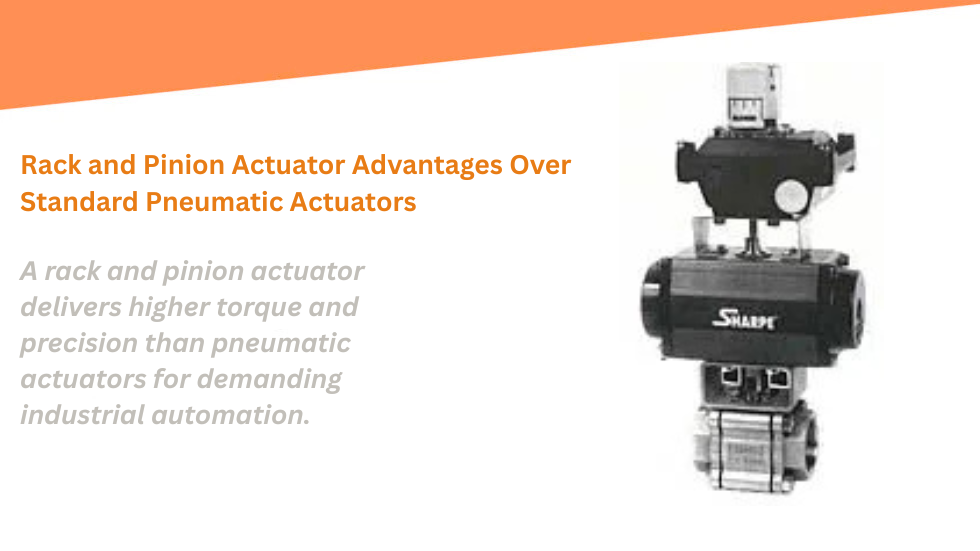
In modern automation, motion control systems must deliver accuracy, reliability, and long-term durability. While the traditional pneumatic actuator remains a staple for simple linear or rotary tasks, many industrial applications now demand higher torque, tighter tolerances, and more predictable performance. This is where the rack and pinion actuator stands out. By converting linear piston movement into controlled rotary motion through a gear-driven mechanism, it offers capabilities that standard pneumatic designs often cannot match.
Higher Torque and More Stable Rotary Output
A rack and pinion actuator generates rotary motion through a meshing gear system, allowing it to deliver strong, consistent torque throughout its full rotation. This mechanical advantage is especially valuable in applications where valves, dampers, or heavy-duty mechanisms must overcome friction, pressure, or irregular loads. Unlike a basic pneumatic actuator, which can lose force due to air compressibility or pressure fluctuations, the gear-driven design maintains stable performance even under demanding conditions.
Better Accuracy
Precision is one of the defining strengths of a rack and pinion actuator. Because its motion is guided by rigid mechanical components rather than compressed air alone, it offers more predictable positioning and minimal backlash. This makes it work well for automated valve control, robotics, packaging equipment, and other systems where consistent angular alignment is needed. A standard pneumatic actuator can be fast and economical, but it often lacks the fine control needed for high-precision tasks.
Harsh & Industrial Environment Durability
 Industrial facilities place heavy demands on motion control equipment. Rack and pinion actuators are built with robust internal gearing, corrosion-resistant housings, and reinforced bearings that withstand vibration, shock, and continuous cycling. Their mechanical stability allows them to perform reliably in environments where temperature swings, contaminants, or high-cycle operation would quickly wear down a typical pneumatic actuator. This durability translates into fewer failures, less downtime, and lower long-term operating costs.
Rack and Pinion Actuator Flexibility for Motion Requirements
While a pneumatic actuator generally provides straightforward linear or limited rotary movement, a rack and pinion actuator supports a wider range of rotation angles and bidirectional control. Engineers can specify 90°, 120°, 180°, or custom rotation ranges depending on the application. This flexibility allows designers to simplify mechanisms, reduce part counts, and achieve more efficient system layouts without relying on external linkages or additional components.
Automation and Control Compatibility
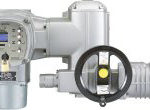 Modern automation systems require actuators that integrate seamlessly with sensors, positioners, and digital control platforms. Rack and pinion actuators pair well with advanced feedback devices and modulating controls, enabling precise motion adjustments and real-time monitoring. While pneumatic actuators can be automated as well, they often lack the mechanical stability needed for fine modulation or high-resolution positioning. For facilities moving toward smarter, more connected operations, the rack and pinion design offers a clear advantage.
When to Choose a Rack and Pinion Actuator
A rack and pinion actuator is the stronger choice when an application requires:
- High torque output with consistent rotary motion
- Precise, repeatable positioning
- Long term durability under heavy cycling
- Compatibility with advanced automation and feedback systems
Standard pneumatic actuators remain useful for simple, low-precision tasks, but when performance matters, the rack and pinion design delivers a clear edge.
Find Your Rack and Pinion Actuator
Both actuator types have their place, but the rack and pinion actuator excels when torque, precision, and long-term reliability play a large role. It outperforms the standard pneumatic actuator in demanding environments, high-cycle applications, and systems requiring accurate rotary motion. For OEMs and engineers designing next-generation equipment, it provides a powerful combination of mechanical strength and automation ready performance.
Ready to improve your motion control system? Get expert guidance on selecting the right actuator for your application and ensure your equipment performs at its highest potential. Contact SEMCOR today to find yours!