


Metal Hose Vs. Rubber: Selection Strategy
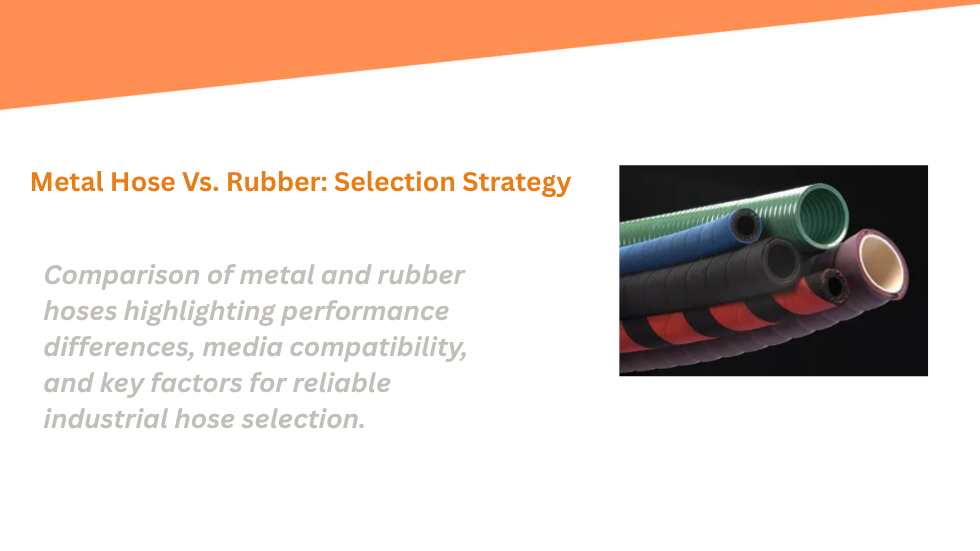
Industrial hose selection affects system reliability, pressure capability, media compatibility, and long-term maintenance planning. Metal hose and rubber hose serve different roles in mechanical, chemical, and utility systems, and the correct choice depends on how each material behaves under temperature, pressure, and environmental exposure. Engineers and sourcing teams evaluate hose performance based on structural stability, chemical resistance, vibration tolerance, and lifecycle cost.
Metal hoses are typically produced from stainless steel alloys and designed for demanding environments involving heat, pressure, or corrosive media. Rubber hoses rely on elastomer compounds that support flexible routing and cost-efficient service for moderate operating conditions. Knowing how each hose type responds to mechanical stress and media exposure is useful for technical procurement.
Key Takeaways: Metal Hose Vs. Rubber Hose: Selection Strategy
- Metal hoses support high pressure, high temperature, and corrosive applications with stable mechanical behavior.
- Rubber hoses provide flexibility and cost efficiency for moderate operating conditions.
- Supplier capability influences quality, certification availability, and lead time.
- A structured procurement process ensures correct hose selection based on performance requirements and lifecycle cost.
 Structural Behavior and Mechanical Performance
Metal hoses maintain stability under thermal cycling, vibration, and mechanical load. Their corrugated construction allows controlled flexibility while preserving strength. A rubber hose provides easier handling and broad flexibility but experiences softening, swelling, or degradation when exposed to certain chemicals or elevated temperatures.
Key mechanical distinctions include:
- Metal hoses retain shape under pressure spikes and thermal expansion.
- Rubber hoses support dynamic movement but have lower resistance to heat and aggressive media.
- Metal hoses maintain roundness under vibration, supporting stable flow.
- Rubber hoses may deform under sustained load or tight bend radius conditions.
These differences influence suitability for steam transfer, chemical processing, cryogenic service, air lines, water transfer, and hydraulic return circuits.
Media Compatibility and Chemical Resistance
Material compatibility is one of the most important selection factors. Stainless steel alloys resist oxidation and maintain strength when exposed to fuels, solvents, and corrosive chemicals. Elastomer compounds vary widely in chemical resistance, and incorrect selection can lead to swelling, cracking, or permeation.
Compatibility considerations include:
- Chemical concentration
- Temperature of the media
- Exposure duration
- Required cleanliness or purity
- Interaction with fittings and connectors
Metal hoses are preferred for corrosive chemicals, high purity systems, and elevated temperatures. Rubber hoses support general service applications where media exposure is moderate and predictable.
Procurement Guide: Technical Criteria for Metal or Rubber Hose Selection
A structured procurement process ensures correct hose selection and predictable performance across the system lifecycle. Selection must account for both operating conditions and total cost of ownership.
Technical Criteria
- Operating temperature and pressure
- Media compatibility and exposure duration
- Required flexibility and minimum bend radius
- Vibration behavior and mechanical load
- Certification requirements for the application
- Expected service life and replacement intervals
Metal hoses typically carry a higher initial cost but deliver longer service life in demanding environments. Rubber hoses offer lower upfront cost but may require more frequent replacement depending on exposure conditions.
 Lifecycle Cost and Maintenance Planning
Long term cost evaluation includes more than initial purchase price. Hose failure can lead to downtime, contamination, or equipment damage. Metal hoses reduce replacement frequency in high temperature or corrosive environments. Rubber hoses reduce installation time and routing complexity in flexible systems.
Lifecycle considerations include:
- Replacement intervals
- Maintenance access
- Environmental exposure
- System downtime risk
- Compatibility with existing fittings and connectors
Selecting the correct hose type reduces long term maintenance cost and improves system reliability.
Choosing the Right Metal or Rubber Hose
Metal hoses and rubber hoses each serve a specific role in their industrial systems, but their performance characteristics differ significantly. By evaluating temperature, pressure, media compatibility, and supplier capability, sourcing teams can select the correct hose for reliable long-term operation. For application-specific guidance or product recommendations, Contact SEMCOR to get started today.