


Choosing the right valve actuator is a foundational decision in any automated flow control system. Electric valve actuators and pneumatic actuators are both proven technologies, each with strengths that make them well suited for specific operating environments. The challenge isn’t deciding which one is “better,” but determining which one aligns with the performance, infrastructure, and lifecycle requirements of your application.
This article breaks down how each actuator type behaves in real world conditions so you can make a confident, application driven choice.
How Electric Valve Actuators Perform
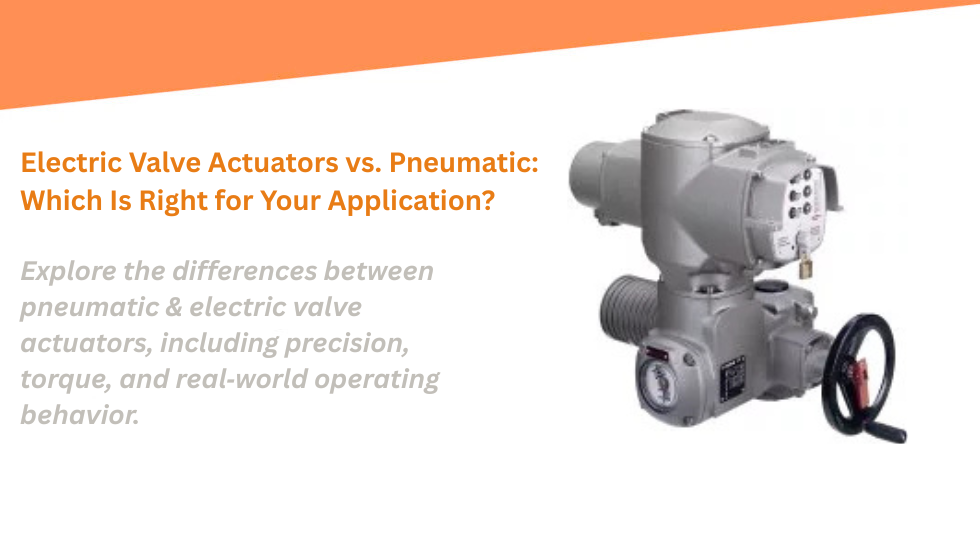
Electric valve actuators convert electrical energy into rotary or linear motion using a motor and gear train. Their biggest advantage is precision. Because they rely on controlled electrical signals, they excel in applications where fine positioning, repeatability, and smooth modulation are important.
Electric actuators integrate easily with digital control systems, offering built in feedback, diagnostics, and compatibility with PLC, SCADA, and IIoT platforms. They also operate quietly and require no compressed air infrastructure, making them ideal for facilities where electrical power is readily available and noise must be minimized.
However, electric actuators typically operate at slower speeds than pneumatic systems, and their electronics may require additional protection in harsh or hazardous environments.
How Pneumatic Valve Actuators Perform
 Pneumatic actuators use compressed air to generate motion, delivering fast response times and high torque output. Their mechanical simplicity makes them extremely durable in environments with vibration, temperature swings, or washdown requirements.
Because they can cycle quickly and deliver significant force, pneumatic actuators are often chosen for emergency shutoff, high throughput processes, or large valves with high breakaway torque. They are also well suited for facilities that already maintain a clean, reliable compressed air system.
While pneumatic actuators can modulate effectively, achieving fine control typically requires a high quality positioner. Air consumption and air quality can also influence long term operating costs.
Key Differences in Real World Use
When comparing electric and pneumatic actuators, the most meaningful distinctions show up in how they behave under specific operating conditions.
Speed Requirements: Pneumatic actuators respond quickly, making them ideal for rapid open/close cycles. Electric actuators move more deliberately, which is advantageous for smooth modulation.
Environmental Conditions: Pneumatics tolerate harsh environments with fewer protective measures. Electric actuators perform best in clean, controlled settings unless equipped with specialized enclosures.
Control Strategy: Electric actuators offer advanced digital control out of the box. Pneumatics can achieve similar performance with the right accessories but require additional components.
Infrastructure Availability: If a facility lacks compressed air, electric actuation is often the more practical choice. If air is already available, pneumatic systems integrate easily.
Torque and Valve Size: Large valves or sticky media often favor pneumatic actuation due to the high force output. Electric actuators handle moderate torque requirements with excellent precision.
Choosing the Right Actuator for Your Application
 The best actuator is the one that aligns with your operational priorities. Consider the following when evaluating your options:
- How fast does the valve need to move?
- If your process requires rapid open/close cycles, such as emergency shutdown, high‑throughput batching, or fast‑acting control, pneumatic actuators typically deliver the speed needed. For slower, smoother, or more controlled movement, electric actuators provide consistent, deliberate positioning.
- Is precise modulation or simple open/close control required?
- For fine throttling, proportional control, or applications where small adjustments matter, electric actuators offer excellent resolution. If the valve only needs to open or close, or if modulation tolerances are wide, pneumatic actuation is often sufficient.
- What utilities are available at the installation site?
- If your facility already maintains a clean, reliable compressed air system, pneumatic actuators integrate easily. If compressed air is unavailable or costly to install, electric actuators are typically the more practical choice.
- How harsh is the operating environment?
- Pneumatic actuators tolerate vibration, moisture, temperature swings, and washdown conditions with minimal protection. Electric actuators perform best in controlled environments unless equipped with specialized enclosures or ratings.
- What torque is required to operate the valve reliably?
- Large valves, sticky media, or high breakaway torque often favor pneumatic actuators due to their strong force output. Electric actuators handle moderate torque requirements well, especially when precision is the priority.
- How important are diagnostics, feedback, and remote monitoring?
- Electric actuators offer built in electronics for position feedback, alarms, and integration with PLC/SCADA systems. Pneumatic actuators can achieve similar functionality with positioners and accessories, but require additional components.
- What is the expected lifecycle cost, not just the upfront cost?
- Electric actuators may have a higher initial price but lower ongoing energy consumption. Pneumatic actuators often cost less upfront but rely on compressed air, which can increase long term operating costs depending on system efficiency.
Both electric and pneumatic actuators can deliver excellent performance when matched correctly to the application. The key is understanding the operational context and selecting the technology that supports long term reliability and efficiency.
Electric Valve Actuator or Pneumatic Actuator?
Electric valve actuators and pneumatic actuators each bring distinct advantages to automated flow control systems. Electric actuators shine in precision, digital integration, and environments where clean, quiet operation is essential. Pneumatic actuators excel in speed, torque, and ruggedness, especially in facilities already equipped with compressed air.
If you’re evaluating actuator options for a new installation or upgrading existing equipment, contact our team to help you compare configurations, performance characteristics, and lifecycle considerations to ensure you select the right solution for your application.