


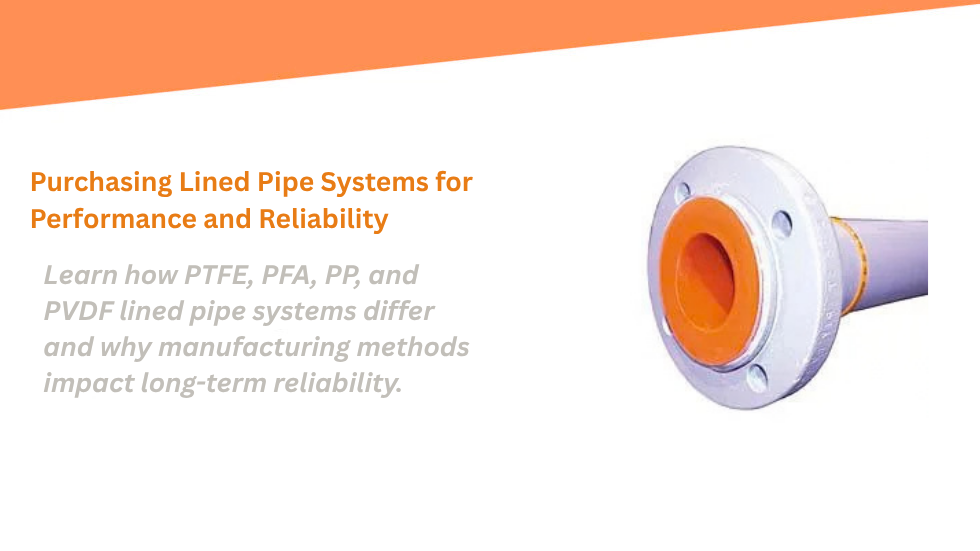
 Plastic-lined piping systems are widely used throughout the chemical, pharmaceutical, semiconductor, and processing industries where corrosive media make conventional metal piping unsuitable. While many users are familiar with fluoropolymer-lined piping, fewer understand that lined pipe manufacturing methods vary significantly among manufacturers, and those differences can directly affect vacuum performance, thermal cycling resistance, permeation resistance, and long-term reliability.
Although often referred to as “Teflon™-lined pipe”, the industry generally refers to the actual liner materials by their technical names, including PTFE, PFA, PP, and PVDF. Each material offers distinct temperature capabilities, chemical resistance characteristics, and application advantages.
Understanding these materials and the technologies used to manufacture lined piping can help engineers and maintenance teams select the best solution for demanding process environments.
Key Takeaways: Purchasing Lined Pipe Systems for Performance and Reliability
- PTFE, PFA, PP, and PVDF are the primary liner materials used in modern plastic-lined piping systems, with each offering distinct advantages depending on chemical compatibility, temperature requirements, and process conditions.
- Manufacturing technology plays a major role in lined pipe performance. Factors such as liner installation, thermal cycling resistance, vacuum capability, permeation management, and dimensional stability can significantly impact long-term reliability.
- Some manufacturers, like Baum and Resistoflex use a process to mechanically lock the liner and steel housing together, helping the pipe function as a single unit under pressure, vacuum, and thermal cycling conditions while reducing the risk of liner buckling and flare cracking. Resistoflex calls this Thermalok®.
- Beyond standard catalog products, custom fabrication capabilities and application expertise help ensure the right piping solution for complex process requirements, making an experienced supplier like Semcor a valuable partner for both new projects and maintenance applications.
Common Liner Materials Used in Plastic Lined Pipe
PTFE
Polytetrafluoroethylene (PTFE) is the most widely specified fluoropolymer lining material for severe chemical service. It offers broad chemical resistance across a wide range of acids, solvents, and aggressive process media. PTFE-lined systems are commonly selected for high-temperature applications and processes that require full vacuum capability.
PFA
Perfluoroalkoxy (PFA) provides chemical resistance similar to PTFE while offering advantages in certain molded fitting applications. PFA is often used in complex component shapes and applications where smooth interior surfaces are especially important.
PP
Polypropylene (PP) is frequently used in less demanding chemical applications where operating temperatures are lower. PP can provide an economical solution while maintaining good resistance to many corrosive chemicals.
PVDF
Polyvinylidene fluoride (PVDF) is commonly selected for applications involving specific chemical environments where either PTFE or PP may not be the optimum choice. PVDF also offers good mechanical properties and strong abrasion resistance in many services.
Why Manufacturing Methods Matter
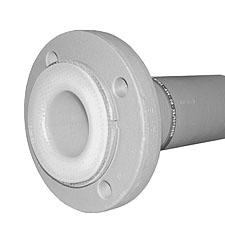
The performance of a lined pipe system depends on more than the liner material itself. The method used to manufacture the liner and secure it within the steel housing has a significant impact on reliability.
Key performance considerations include:
- Vacuum resistance
- Thermal cycling capability
- Resistance to liner buckling
- Resistance to flare cracking
- Permeation management
- Long-term dimensional stability
Different manufacturers utilize different technologies to address these challenges.
Paste-Extruded PTFE Technology
Companies such as BAUM utilize paste-extruded PTFE liner technology throughout their lined piping systems.
According to BAUM, paste-extruded PTFE liners are installed in a stress-free configuration and are automatically tested as part of the manufacturing process. This can be used for a range of lined piping components, including pipe, elbows, tees, reducers, expansion joints, and specialty components.
Paste-extruded systems continue to be widely used throughout the chemical processing industry due to their established performance history and broad availability across many piping configurations. Resistance to permeation is typically superior with this process compared to others.
The Resistoflex Thermalok® Process
Resisttoflex developed the Thermalok process in 1962. According to Resistoflex, the Thermalok process locks the plastic liner into the steel housing so the liner and pipe act as a monolithic unit, even during significant thermal cycling.
The process includes:
- Verification and testing of incoming resin materials
- Controlled liner forming and inspection
- Reduction of liner diameter through a sizing die
- A controlled heating cycle that relaxes the liner within the steel housing
- Controlled hot flaring of liner ends
- Final testing to ASTM F1545 requirements
The result is a pipe spool designed to maintain dimensional stability during vacuum, pressure, and thermal cycling conditions while reducing the risk of liner buckling and cracked flares. Resistoflex states that Thermalok piping is capable of full vacuum operation throughout the liner’s rated temperature range.
Selecting the Right Lined Pipe System
The best choice of liner material depends on the specific process conditions.
Areas that should be evaluated include:
- Chemical compatibility
- Operating temperature
- Pressure requirements
- Vacuum conditions
- Thermal cycling frequency
- Permeation concerns
- Installation requirements
- Long-term maintenance objectives
Different facilities often require different solutions. In some applications, vacuum resistance may be the primary concern. In others, chemical resistance, permeation reduction, or cost may drive material selection.
Beyond Standard Components Custom Fabrication Matters
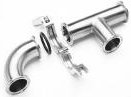 Many process systems require more than standard catalog components.
Custom fabrication capabilities can provide solutions for:
- Special spool lengths
- Custom reducers
- Specialty branch connections
- Instrument connections
- Tank nozzle assemblies
- Dip pipes
- Expansion joint assemblies
- Complex piping configurations
- Emergency replacement components
The ability to provide engineered solutions and custom-manufactured assemblies can significantly reduce installation time and improve overall project execution.
Why Work with SEMCOR
Choosing the right lined piping system is only part of a successful project. Equally important is working with a supplier that understands the application, provides technical support, and can deliver both standard and custom solutions.
SEMCOR works closely with customers to help identify the appropriate lined piping technologies for their operating conditions. Whether the requirement involves PTFE, PFA, PP, or PVDF-lined systems, SEMCOR can assist with product selection, system design support, replacement components, and custom fabrication requirements.
Customers benefit from:
- Application-focused product recommendations
- Custom fabrication capabilities
- Support for maintenance and replacement projects
- Assistance with complex piping configurations
- Responsive technical expertise
Purchasing Lined Pipe
Plastic-lined piping remains one of the most effective solutions for handling corrosive process media.
Whether a project requires PTFE, PFA, PP, or PVDF-lined piping, selecting the appropriate manufacturing technology and working with an experienced partner like SEMCOR can help ensure a successful and dependable piping system for years to come. Contact us today to get started!