


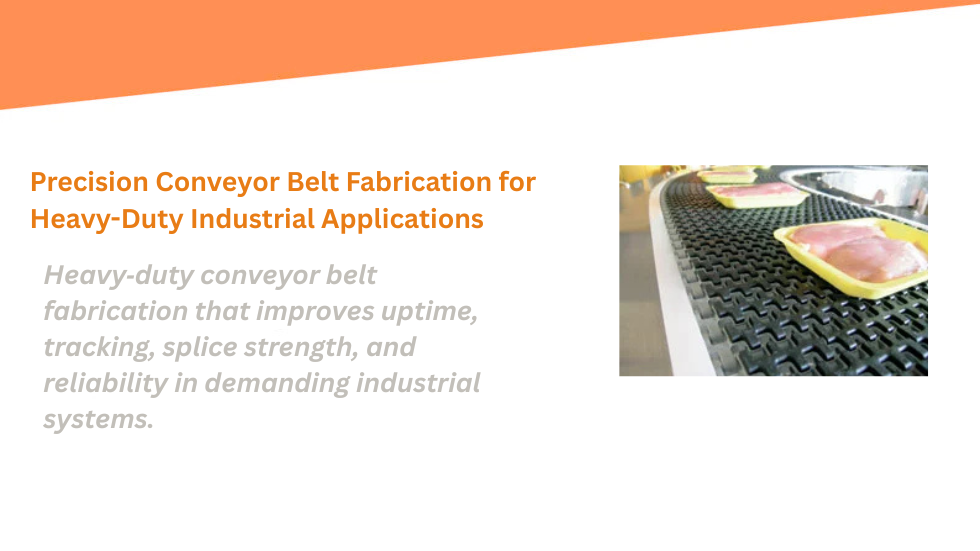
Conveyor belt fabrication for heavy-duty environments is a technical process that directly influences uptime, load capacity, belt tracking, splice strength, and long-term operating cost. Experts understand that fabrication quality determines how well a belt performs under abrasion, impact, heat, chemical exposure, and continuous load cycles. In industries such as aggregates, recycling, foundry operations, bulk handling, and high-volume manufacturing, belts must be built with tight tolerances, verified materials, and fabrication methods that match the mechanical and environmental demands of the system.
For engineers, maintenance leaders, and purchasing teams, fabrication is not a simple service. It is a performance variable that requires careful evaluation.
Why Precision Coveyor Belt Fabrication Matters
Heavy-duty conveyor systems operate under constant stress. When fabrication is precise, belts track correctly, splices hold under tension, wear patterns remain predictable, and maintenance intervals become more manageable. Even small deviations in trimming, splice geometry, or material selection can create mistracking, premature wear, or unexpected downtime. Precision fabrication is the foundation of reliable conveying in demanding environments.
 Material Selection and Verification
Material choice is one of the most important decisions in fabrication. Rubber compounds, fabric plies, and cover thicknesses determine how the belt responds to abrasion, heat, chemicals, and load cycles. Expert buyers should expect suppliers to verify tensile ratings, tear resistance, hardness values, and any required certifications for food, chemical, or high-temperature environments.
A reliable supplier should also provide traceability. Documented batch testing and material origin records give buyers confidence that the belt will perform as expected in high-stress applications.
Splicing Quality and Process Control
Splice integrity often determines belt lifespan. In heavy-duty systems, hot vulcanized splices are preferred because they provide consistent strength when temperature and pressure are controlled correctly. Finger splices support high-tension applications, while step splices are used for thicker belts that require gradual transitions.
A supplier committed to precision fabrication should provide clear documentation of splice procedures, cure cycles, and test results. This level of transparency is needed for users who need predictable performance.
Tracking Accuracy and Edge Preparation
Tracking stability begins with fabrication accuracy. Straight cuts, aligned plies, and consistent edge trimming prevent the belt from drifting under load. In wet or chemical environments, sealed edges can add protection and reduce fraying.
When fabrication tolerances are loose, tracking problems appear quickly. Correcting these issues later requires downtime, realignment, and sometimes complete belt replacement. Precision at the fabrication stage prevents these disruptions.
Custom Features for Heavy Duty Applications
Many heavy-duty systems rely on custom fabrication features that support specific conveying tasks. These features improve performance and extend belt life when designed and installed correctly.
Key examples include:
- Cleats for incline conveying
- Sidewalls for bulk containment
- V-guides for positive tracking
- Impact-resistant zones for loading points
Each feature must be bonded with controlled cure cycles and verified adhesion strength. Dimensional accuracy is equally important, especially when cleats or sidewalls interact with mechanical components along the conveyor path.
Conveyor Belt Fabrication Quality Assurance and Testing
A precision fabricator should provide inspection reports, splice strength testing, cover hardness verification, and ply adhesion results. These checks confirm that the belt meets the specifications required for heavy duty use.
Quality assurance is not optional. It is the difference between a belt that performs reliably and one that introduces risk into the system.
System Tension Profiles and Conveyor Belt Fabrication
High-tension systems require belt constructions that can absorb load variation without stretching or deforming. Straight-warp fabrics, aramid reinforcement, and controlled ply alignment help maintain stability under fluctuating tension. A precision fabricator should be able to model tension zones across the conveyor path and recommend belt constructions that match those profiles.
Thermal Behavior and Cure Cycles
Heat exposure affects rubber elasticity, splice strength, and cover hardness. Fabricators who understand thermal behavior can adjust cure cycles, compound selection, and splice geometry to prevent hardening, cracking, or premature delamination. This is especially important in foundry, asphalt, and high-temperature manufacturing environments.
Dynamic Loading and Impact Zones
Loading points create concentrated stress that can exceed the belt’s rated capacity. Advanced fabrication incorporates reinforced zones, thicker covers, or specialized compounds that absorb impact without tearing. Users should expect suppliers to evaluate loading conditions and propose reinforcement strategies that match real-world stress patterns.
 Pulley Interaction and Flex Fatigue
Flex fatigue is a common failure mode in heavy-duty belts. The interaction between belt thickness, splice geometry, and pulley diameter determines how quickly fatigue develops. A precision fabricator should be able to calculate flex cycles and recommend belt constructions that minimize stress at each pulley rotation.
Conveyor Belt Fabrication Purchasing Considerations
Selecting a conveyor belt fabricator for heavy-duty applications requires more than comparing price and lead time. Buyers should evaluate deeper operational and technical criteria that directly influence long-term performance.
Supplier Process Control
A high-end fabricator should maintain documented process control for trimming, curing, splicing, and bonding. Buyers should request:
- Process control documentation
- Calibration records for presses and cutting equipment
- Material batch traceability
These records demonstrate consistency and reduce the risk of fabrication variability.
Lifecycle Cost Evaluation
A belt with a higher upfront cost may reduce total lifecycle cost through longer service life, fewer changeouts, and lower maintenance. Buyers should evaluate:
- Expected service hours
- Wear rate under specific materials
- Splice longevity
- Cost of downtime during replacement
This approach supports long-term operational planning rather than short-term savings.
Supplier Integration Capability
Some suppliers can integrate belt fabrication with system audits, pulley lagging, chute design, and maintenance planning. This level of integration helps ensure that the belt is not treated as an isolated component but as part of a complete conveying system. Expert users benefit from suppliers who understand how fabrication choices influence the entire conveyor line.
What Expert Buyers Should Expect from a Conveyor Belt Fabrication Supplier
Expert users benefit from suppliers with advanced technical capability. This includes in-house vulcanizing presses, CNC cutting equipment, and controlled curing environments. Engineering support is equally important. A supplier should be able to assist with belt selection, system audits, failure analysis, and tension calculations.
Lead time and responsiveness matter. Buyers should evaluate emergency fabrication capability, stocking programs, and on-site installation services. Documentation and traceability should be standard, including material certifications, splice records, and inspection reports.
Suppliers with a history of success in heavy-duty applications bring practical knowledge that reduces risk and supports long term reliability. Contacting SEMCOR today can help you improve uptime and reliability with fabrication work built for demanding industrial environments.