


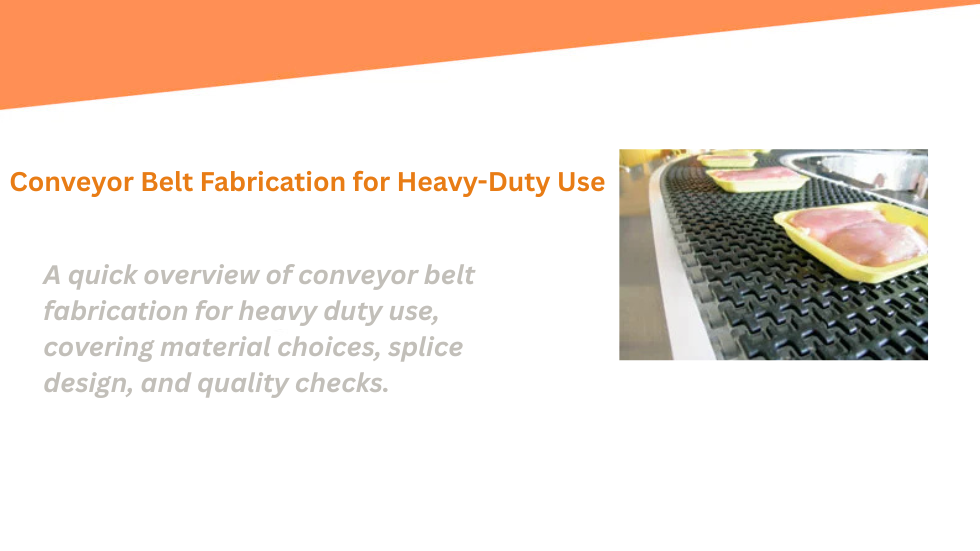
Conveyor systems in heavy-duty environments face constant stress from weight, abrasion, impact, and continuous operation. The quality of the conveyor belt fabrication process directly affects how well a belt performs under these conditions. From material selection to splice design, every fabrication step influences durability, tracking, and long term reliability.
Why Conveyor Belt Fabrication Quality Matters in Heavy Duty Systems
Heavy-duty conveyor belts must withstand aggressive loads, sharp materials, and nonstop operation. Poor fabrication can lead to premature wear, mistracking, splice failure, or unexpected downtime. Strong fabrication ensures consistent belt strength, reliable tracking, smooth operation under load, longer service life, and fewer maintenance interruptions. In environments where uptime is important, fabrication quality directly affects productivity.
Material Choices That Influence Belt Strength During Conveyor Belt Fabrication
The foundation of any heavy-duty belt is the material used during fabrication. Reinforced fabrics, rubber compounds, and specialty covers all contribute to performance.
Reinforced Fabrics
Belts for heavy-duty use often rely on high-strength fabrics such as polyester, nylon, or aramid. These materials support tension, resist stretching, and maintain stability under load. Their ability to handle repeated flexing without deformation makes them suitable for long, continuous runs.
Rubber Compounds
Different compounds are selected based on the environment. Abrasion-resistant rubber supports aggregate handling, heat-resistant blends withstand elevated temperatures, and oil-resistant compounds perform well in recycling or industrial waste systems. Choosing the right compound during fabrication helps the belt maintain integrity even when exposed to harsh conditions.
Specialty Covers
Covers protect the belt from wear and environmental exposure. Fabrication may include extra-thick top covers, cut-resistant blends, or weather-resistant coatings. These additions help the belt maintain performance over long service cycles and reduce the need for frequent replacement.
 Splice Design for Heavy-Duty Reliability
A conveyor belt is only as strong as its splice. Fabrication teams select splice types based on tension, load, and application.
Mechanical Splices
Mechanical fasteners offer quick installation and easy maintenance. They are common in systems where downtime must be minimized or where belts must be changed frequently. Their strength and simplicity make them a practical choice for field repairs.
Vulcanized Splices
Heat-vulcanized splices create a smooth, strong joint that performs well under high tension. They are preferred for long-term heavy-duty use because they provide a seamless connection that reduces snag points. When fabricated correctly, vulcanized splices deliver consistent performance across demanding applications.
Finger and Step Splices
These splice styles improve flexibility and reduce stress concentration. They help the belt transition smoothly across pulleys and idlers, reducing wear at the splice. Their design supports better tracking and longer service life in systems with variable loads.
Conveyor Belt Fabrication Techniques That Improve Tracking
Tracking issues can cause edge wear, belt damage, or system downtime. Fabrication plays a major role in preventing these problems.
Precision Cutting
Accurate belt cutting ensures straight edges and consistent width, reducing drift during operation. Precision cutting also helps the belt interact correctly with guides and pulleys. This step is important for maintaining alignment across long conveyor runs.
Correct Belt Squaring
Squaring the belt during fabrication helps maintain alignment across pulleys and idlers. A properly squared belt reduces side-to-side movement and supports stable tracking. This improves overall system efficiency and reduces wear on belt edges.
Edge Reinforcement
Some heavy-duty belts include reinforced edges to reduce fraying and improve tracking stability. Reinforced edges help the belt withstand lateral forces and abrasive contact. This added durability is especially useful in systems with frequent load shifts.
Adding Cleats, Guides, and Sidewalls During Conveyor Belt Fabrication
Many heavy-duty applications require additional fabricated features to support material control.
Cleats
Cleats help move bulk material up inclines or prevent rollback. They are fabricated in various heights and shapes depending on the material being conveyed. Properly bonded cleats improve throughput and reduce material loss.
Guides
Guides support positive tracking in systems with high lateral force. They help the belt stay centered even when handling uneven loads. Fabricated guides are especially useful in high-speed or high-impact environments.
Sidewalls
Sidewalls keep material contained, especially in steep or high-volume applications. They prevent spillage and help maintain consistent flow. Strong bonding during fabrication ensures sidewalls remain secure under heavy load.
Quality Control During Conveyor Belt Fabrication
To ensure dependable performance, heavy-duty conveyor belts go through several inspection steps before installation. These checks confirm that the belt meets dimensional, structural, and operational requirements.
- Surface Review: Inspectors examine the belt surface for defects, irregularities, or inconsistencies that could affect performance. A smooth, uniform surface helps reduce wear and supports clean tracking.
- Splice Verification: Splices are tested for strength, alignment, and uniformity. This step confirms that the splice can handle tension and load without separation during operation.
- Dimensional Accuracy: Belt width, length, and thickness are measured to ensure they match system specifications. Accurate dimensions help the belt interact correctly with pulleys, idlers, and guides.
- Cover Thickness Checks: Technicians verify that the top and bottom covers meet required thickness levels. Proper cover thickness supports abrasion resistance and long service life.
- Edge Integrity Review: Belt edges are inspected for fraying, uneven cuts, or weak points. Strong edges help maintain tracking and reduce wear during operation.
 Where Heavy-Duty Conveyor Belts Are Used
Fabricated heavy-duty belts support demanding environments such as mining, aggregate processing, recycling facilities, bulk material handling, foundry operations, and high-volume industrial manufacturing. These industries rely on belts that can handle continuous load without failure. Proper fabrication ensures the belt can withstand the daily challenges of these environments.
Where Conveyor Belt Fabrication Fits in Your Business
Heavy-duty conveyor belt fabrication shapes how well a system performs under stress. Material selection, splice design, tracking features, and quality control all contribute to a belt that runs smoothly, resists wear, and supports long-term reliability. With the right fabrication approach, operators can reduce downtime, improve throughput, and maintain consistent performance across demanding applications.
If your operation needs dependable conveyor belt fabrication for heavy-duty applications, our team can help you select the right materials, build strong designs, and deliver belts that support consistent performance. Contact us today to discuss your project and get a quote.