


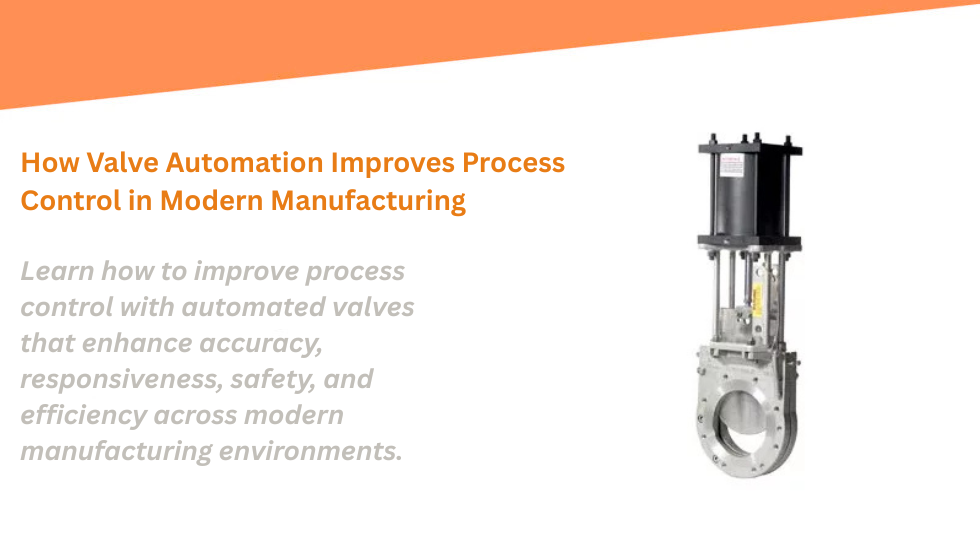
Modern manufacturing depends on precise, repeatable control of fluids, gases, and process media. As production lines become more connected and more data driven, manual valve operation simply cannot keep pace with the speed, accuracy, and consistency required. Valve automation has become a core element of advanced process control, enabling manufacturers to improve throughput, reduce variability, and maintain tighter control over quality.
Below is a detailed look at how automated valve systems support today’s manufacturing environments.
Consistent, Repeatable Flow Control Through Valve Automation
Automated valves eliminate the variability associated with manual operation. Actuators, positioners, and feedback devices ensure that each valve opens, closes, or modulates to the exact position required by the control system. This consistency is especially important in applications involving:
- Batch processing
- Chemical dosing
- Temperature and pressure regulation
- High purity or contamination sensitive environments
By removing operator dependent variation, manufacturers achieve more stable process conditions and more predictable output.
Faster Response to Process Changes
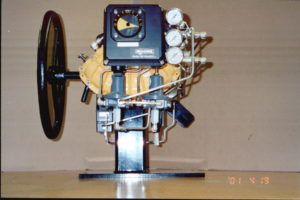
Modern production lines rely on real time adjustments to maintain efficiency. Automated valves respond immediately to signals from PLCs, DCS platforms, and sensor networks. This rapid response helps maintain steady operating conditions when:
- Flow demand changes
- Pressure spikes occur
- Temperature control loops adjust
- Equipment cycles shift
Faster reaction times reduce waste, prevent off spec product, and support continuous improvement initiatives.
Improved Safety and Reduced Manual Intervention
Automated valves reduce the need for workers to manually operate equipment in hazardous or hard to reach areas. This lowers exposure to:
- High temperatures
- High pressures
- Corrosive or toxic media
- Confined spaces
Automation also supports emergency shutdown (ESD) systems, ensuring valves move to a safe position instantly when triggered by alarms or interlocks.
Valve Automation Integration with Digital Monitoring and Diagnostics
Valve automation is a key component of Industry 4.0 strategies. Smart actuators and positioners provide continuous feedback on:
- Valve position
- Cycle counts
- Torque and load
- Seal wear
- Response time
This data allows maintenance teams to shift from reactive repairs to condition based planning. Early detection of performance changes helps prevent downtime and extends equipment life.
Enhanced Accuracy for High Precision Manufacturing
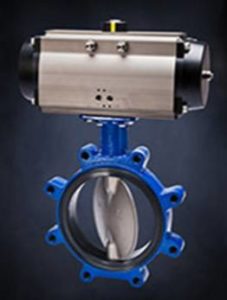 Industries such as pharmaceuticals, food processing, electronics, and specialty chemicals require extremely tight control over process variables. Automated valves support:
- Fine modulation for micro flow adjustments
- Stable control in high purity systems
- Repeatable performance across long production runs
- Compliance with regulatory and quality standards
Accurate valve positioning directly improves product consistency and reduces the risk of batch failures.
Valve Automation Improves Scalability for Expanding Production Lines
As manufacturers add new equipment or increase capacity, automated valve systems can be integrated into existing control architectures. This scalability supports:
- Multi line production
- Modular skid systems
- Distributed control networks
- Remote monitoring and operation
Automation ensures that new process steps can be added without compromising overall system stability.
Automate Your Valves and Improve Manufacturing
Valve automation has become a foundational element of modern manufacturing. By improving accuracy, responsiveness, safety, and data visibility, automated valve systems help facilities operate more efficiently and with greater control over quality. As industries continue to adopt advanced automation and digital technologies, the role of automated valves will only grow.
If you’re exploring valve automation for a new system or looking to improve the performance of an existing line, our team can help you evaluate options and select the right solution for your application. Contact us today to discuss your project and get expert guidance on automated valve systems.